


Solar Solutions
On-Grid Solar System
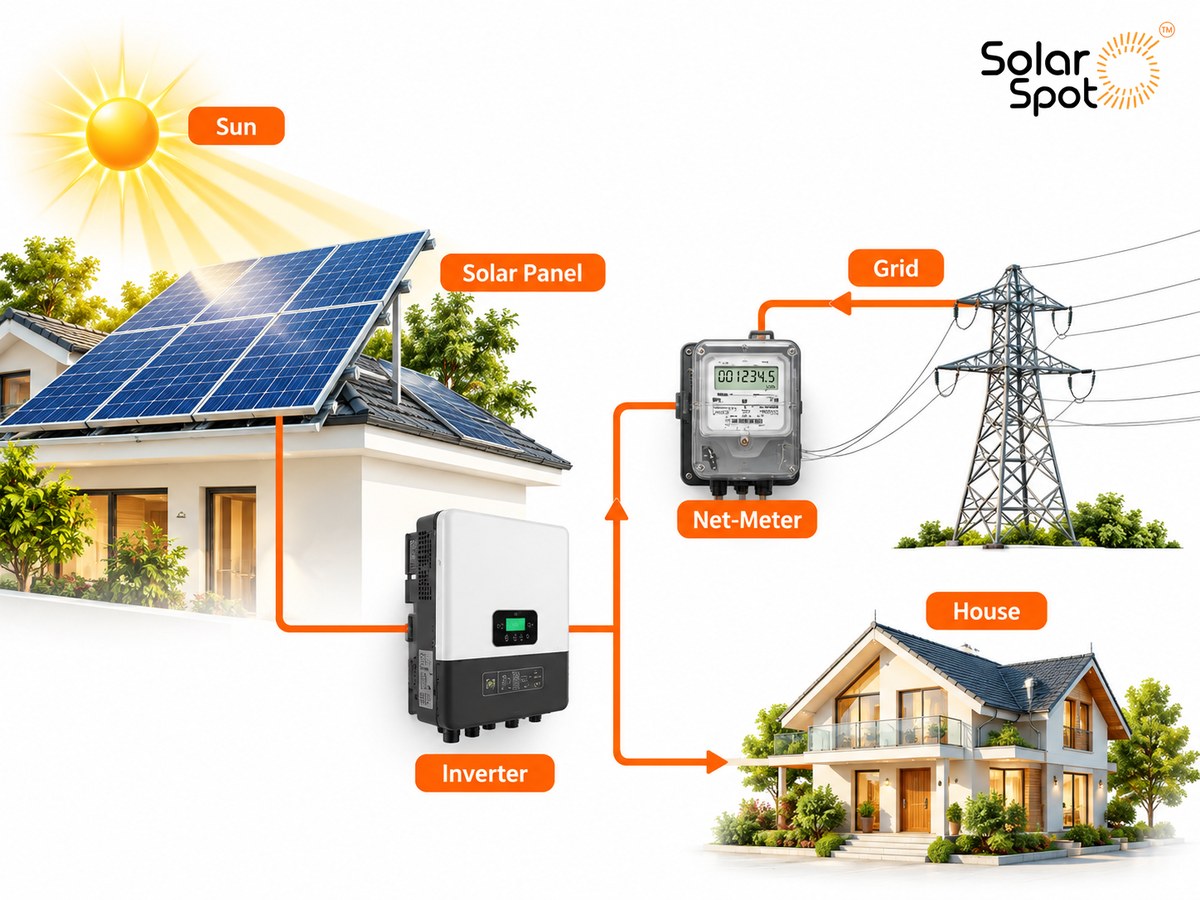
An on-grid system connects to the utility grid through a net meter. Your home or business uses solar power first, and any excess energy is exported and adjusted on your electricity bill.
- BiggestBill savings
- No batteryNothing to replace
- SubsidyEligible for homes
- Net meterPaperwork handled
Quick answer
How Does an On-Grid Solar System Work?
An on-grid system powers your home with solar first and exports surplus units to the grid through a net meter.
Surplus units are credited on your electricity bill, and the grid supplies power at night and on cloudy days. It needs no battery, which makes it the lowest-cost way to cut your bill.
- Battery
- Not needed
- Billing
- Net metering
- Subsidy
- Eligible for homes
- Best for
- Lowest electricity bills
How It Works
How On-Grid Solar Works
The grid acts as your storage, so no battery is needed.
- 01
Panels Generate Power
Solar panels turn sunlight into DC electricity.
- 02
Inverter Converts It
The inverter turns it into AC power matched to the grid.
- 03
You Use Solar First
Your appliances run on solar power whenever the sun is out.
- 04
Extra Goes to the Grid
Surplus units are exported and recorded by the net meter.
- 05
Grid Fills the Gap
At night or during cloudy weather, you draw power from the grid as usual.

TOPCon Panels
More Energy from Every Square Foot
N-type TOPCon bifacial panels sit on an open frame, allowing them to stay cooler, capture light on both sides, and deliver a higher power yield from the same roof footprint.
- We use N-type TOPCon bifacial modules.
- Panels feature a 30-year performance warranty.
- We handle all net metering documentation and paperwork.
Pros and Limits
Is On-Grid Right for You?
Advantages
- On-grid has the lowest upfront cost of the three system types.
- There is no battery to maintain or replace.
- Homes are eligible for the PM Surya Ghar subsidy.
- Generation and billing are easy to track.
Keep in Mind
- An on-grid system switches off during a power cut for the safety of line workers.
- On-grid works best where grid supply is reliable.
- System size cannot exceed your sanctioned load without a load increase.
Components
What Your System Includes
TOPCon N-Type Panels
N-type TOPCon modules generate more power from the same roof area.
Trusted-Brand Inverters
We integrate reliable on-grid and hybrid inverters from a trusted Indian brand.
HDGI Structure
Our CAD-designed legs are made of 3 mm thick HDGI steel and withstand winds up to 180 km/h.
Net Metering Paperwork
We manage the DISCOM application process and follow up until the meter is successfully installed.
Live Monitoring App
Track generation anytime, in real time, on your phone.
7-Year Maintenance
We carry out scheduled check-ups, with the scope written into your agreement.
Compare
On-Grid vs Hybrid vs Off-Grid
| Feature | On-grid | Hybrid | Off-grid |
|---|---|---|---|
| Grid connection | Yes, with net meter | Yes, with net meter | No |
| Battery | No | Yes | Yes |
| Power during cuts | No (shuts down for safety) | Yes, for selected loads | Yes |
| PM Surya Ghar subsidy | Yes (for homes) | Possible (panels only) | No |
| Upfront cost | Lowest | Higher | Highest |
| Best for | Reliable grid and maximum savings | Areas with frequent power cuts | Remote areas with weak or no grid |
Subsidy depends on eligibility and DISCOM approval. Battery cost is not covered by the subsidy.
FAQ
Frequently Asked Questions
Find clear answers on net metering, generation, subsidy, and power cuts for on-grid systems.

Does an on-grid system give power during a power cut?
No. It shuts down automatically when the grid goes down. This anti-islanding protection keeps line workers safe.
What is net metering?
A bi-directional meter records the units you export and import. You pay only for the net units you use.
How many units will it generate?
In North India, our systems generate about 150 units per kW per month (it varies a little by state and season). A 3 kW system makes about 450 units and a 5 kW system at least 710 units, depending on season and shade.
Is it eligible for subsidy?
Yes, for residential homes under PM Surya Ghar, up to ₹78,000.
Can my system be larger than my sanctioned load?
Usually not. Most DISCOMs limit rooftop capacity to your sanctioned load. If you need a bigger system, we help you apply for a load increase first.
How long do the panels last?
TOPCon panels carry a 30-year performance warranty from the manufacturer and keep generating for decades with basic care.
Free Roof Visit
Get an On-Grid Solar Quote
Share a few details, and our solar expert will call you to schedule your free roof visit.