


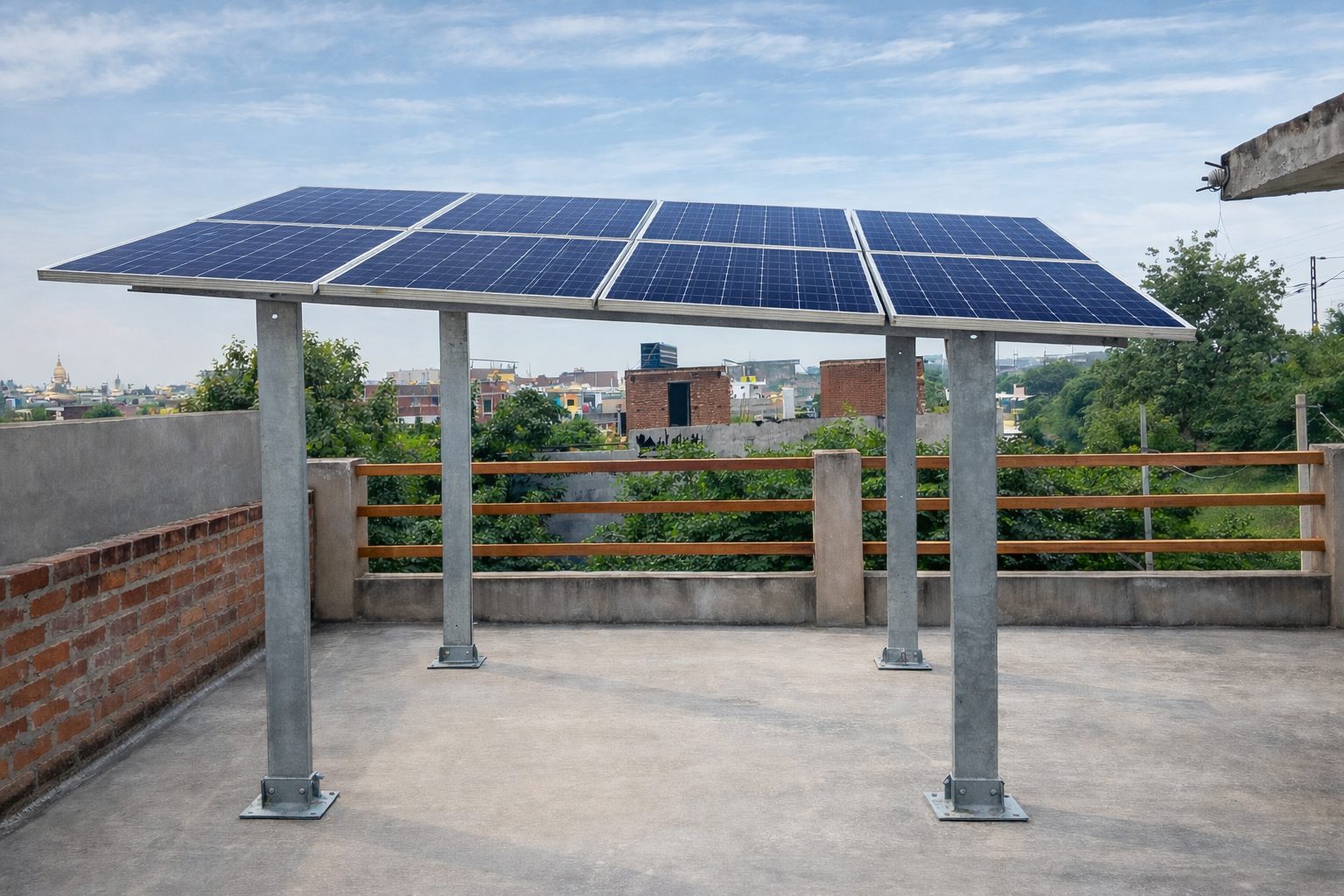
Solar Solutions
Off-Grid Solar System
An off-grid system operates fully independently of the utility grid and runs entirely on a dedicated battery bank. It is the ideal solution for areas with no grid access or a highly unstable supply, such as remote farmhouses, isolated job sites, and agricultural pumps.
- IndependentNo grid needed
- BatteriesPower day and night
- RemoteFarmhouses and sites
- CleanNo diesel generator
Quick answer
What Is an Off-Grid Solar System?
An off-grid system runs only on solar panels and batteries, with no connection to the utility grid.
Solar panels charge a battery bank through the day, and an inverter powers your appliances day and night. It suits remote farmhouses, job sites, and agricultural pumps where the grid is absent or unreliable.
- Grid
- Not required
- Storage
- Battery bank
- Best for
- Remote sites and farmhouses
- Replaces
- Diesel generators
How It Works
How Off-Grid Solar Works
- 01
Panels Generate Power
Solar panels produce DC electricity through the day.
- 02
Charge Controller
An MPPT controller gets the most from the panels and charges the batteries safely.
- 03
Battery Bank Stores It
Excess power is stored for use at night and during cloudy weather.
- 04
Inverter Powers Your Loads
Battery power is converted to AC for your appliances.

Standalone Power
Power Where the Grid Cannot Reach
An off-grid system runs your site entirely on solar and batteries, engineered for the days of autonomy your site requires.
- The battery bank is sized for cloudy days.
- The structure is built strong for remote sites.
- Our team provides maintenance support.
Battery Sizing
Getting the Battery Right
The battery is usually the biggest cost in an off-grid system, so careful sizing matters.
Days of Autonomy
Days of autonomy is the number of days an off-grid system can run on batteries alone, and we size it for your site.
Cloudy-Day Output
On heavily overcast days, energy generation may drop to a small fraction of its peak capacity.
Day and Night Load
We split your load between daytime use and battery use at night.
Pros and Limits
Is Off-Grid Right for You?
Advantages
- You get power where there is no grid.
- Power cuts do not affect your supply.
- Off-grid solar is clean, quiet, and emission-free.
Keep in Mind
- Off-grid has the highest upfront cost of the three types.
- Off-grid is not eligible for the PM Surya Ghar subsidy.
- Batteries need periodic replacement.
- Where the grid is reliable, on-grid is cheaper.
Compare
On-Grid vs Hybrid vs Off-Grid
| Feature | On-grid | Hybrid | Off-grid |
|---|---|---|---|
| Grid connection | Yes, with net meter | Yes, with net meter | No |
| Battery | No | Yes | Yes |
| Power during cuts | No (shuts down for safety) | Yes, for selected loads | Yes |
| PM Surya Ghar subsidy | Yes (for homes) | Possible (panels only) | No |
| Upfront cost | Lowest | Higher | Highest |
| Best for | Reliable grid and maximum savings | Areas with frequent power cuts | Remote areas with weak or no grid |
Subsidy depends on eligibility and DISCOM approval. Battery cost is not covered by the subsidy.
FAQ
Frequently Asked Questions
Find clear answers on subsidy, batteries, air conditioners, and whether off-grid suits your home.

Is there a subsidy for off-grid solar?
No. PM Surya Ghar applies to grid-connected rooftop systems only.
Which batteries do you use?
Off-grid systems typically use lithium (LFP) or lead-acid batteries. We recommend the type after studying your load and budget.
Can an off-grid system run an air conditioner?
Yes, if the panels and battery are sized for it. This needs a larger system.
Is off-grid right for a home in the city?
Usually not. Where the grid is available, on-grid or hybrid gives better value.
Free Roof Visit
Get an Off-Grid Solar Quote
Share a few details, and our solar expert will call you to schedule your free roof visit.